Potato risk management more important than ever
Potato production is a risky business, but there are a growing number of strategies to combat the ever-growing lists of threat to the industry.
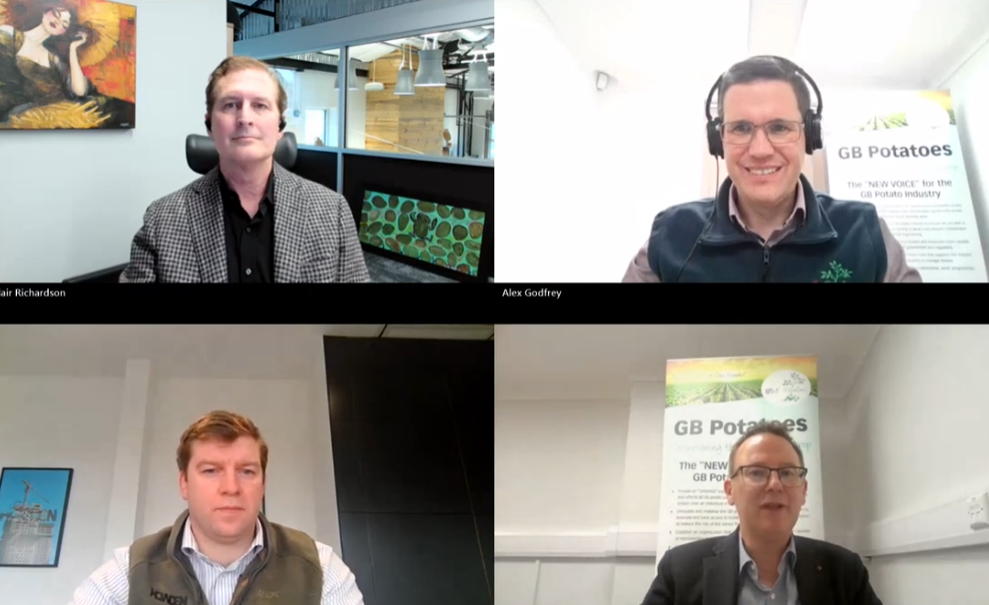
GB Potatoes recently discussed risk in its Cutting the odds: Managing risk in potato production webinar. It heard from GB Potatoes chair Alex Godfrey, the CEO and President of Potatoes USA, Blair Richardson and Rory Gibson, Scottish regional director of insurance specialists Howden, who introduced new cover especially for growers.
Potatoes have always been a weather-sensitive crop, but with conditions becoming more volatile, protecting production is essential, argued Rory as he explained a new parametric protection policy for GB Potatoes members.
“We are seeing increasingly extreme and unpredictable weather patterns, while traditional insurers are becoming more risk‑averse,” he said.
“Meanwhile, reduced farming subsidies and more uncertainty in crop returns mean protection is more important than ever.”
He explained that unlike traditional insurance that covers the risk of a peril such as fire, parametric insurance covers against a measurable event, such as 20 millimetres of rain. Once a certain threshold is met payment can be made in as little as 24 hours and always within two months without the need for an assessor visit. The offer for potato growers is:
- Main risks identified: excess rain during harvest, not drought.
- Cover period: 15 August – 15 November.
- Three rain‑trigger categories:
- Short, intense rainfall (3‑day event).
- Medium, prolonged rainfall (10‑day event).
- Cumulative wet season over the whole period.
These thresholds are measured by satellite data and information from local weather centres. Rory said that potato policyholders will typically look to cover £5,000 per hectare of income. That would cost approximately £259/ha or just over £5/tonne. Typical payments are likely to be £2,273/ha for £1,554 of cover over five years.
Myth-busting
Blair Richardson explained how a concerted campaign over many years has helped manage the reputational risk of potatoes and reinforce their standing as nutritious and versatile food for all ages.
“Fifteen years ago, little research existed on potato nutrition. Misperceptions—like the ‘couch potato’ stereotype—shaped public opinion. In 2010 we began investing $2–2.5 million annually in health and nutrition research, totalling about $30 million so far. This investment now enables us to respond quickly and confidently when inaccurate information appears in the media.”
He said the rise of social media has made the task of dispelling inaccurate information even more information, with studies showing that the vast majority of nutrition information on Tik Tok is inaccurate and 45% of nutrition information on Instagram misleading.
“Influencers have financial incentives to prioritise virality over accuracy. This makes credible, science‑based research essential for defending the industry. Misinformation spreads faster than corrections, so our strategy includes engaging directly with media.”
This approach has resulted in a 36% retraction rate and a 60% reduction in the number of misinformation incidents requiring intervention.
“Our messaging—such as ‘potatoes are real food, real performance’—has gained strong traction, now ranking among the top search results for potatoes. This shift reflects the payoff of proactive investment rather than reactive communication.”
Blair said that Potatoes USA’s efforts to myth-bust are a global task and said that GB Potatoes is most welcome to use its information and resources to promote the benefits of potatoes in the UK and beyond. GB Potatoes has already taken him up on the offer to help develop its own nutritional messages.
GB Potatoes manages risk
During the webinar, Lincolnshire potato grower and GB Potatoes chair Alex Godfrey, demonstrated that the organisation is working to help growers and the wider industry to manage its risks by focusing on its five key aims of building collaboration across the supply chain; horizon scanning to identify emerging issues; lobbying to influence policy, legislation and research priorities; promoting the British potato industry through traditional and social media and providing members with access to leading technical research and expertise.
Regular activity by GB Potatoes includes interaction with potato sector organisations and consultation groups for the seed and fresh groups. GB Potatoes also collaborates with the Horticultural Crop Protection forum and the National Potato Innovation Centre, with which it is running a joint summit in London in the summer to demonstrate the importance of the potato industry to policymakers.
Residual AHDB funding of £1.8 million means that risk-reducing projects such as the Fight Against Blight programme, aphid monitoring, virus management tools, CIPC residue monitoring and reputational management can continue, although Alex warned that the industry would need to self-finance these initiatives within the next three to five years.
A major win for GB Potatoes has been the CiC-START PhD programme, said Alex. Run jointly with the Scotch Whisky Research Institute, it has secured funding for 24 PhD positions over three years, including money for pre-competitive research.
This focus on the next generation is also seen in the Potato Industry Development Programme, which is supporting enthusiastic new entrants. Participants have already visited potato supply chain companies Haith, McCain, Branston and AKP, with visits to Scotland and London planned.
To view the webinar login to your member area, here or not yet a member, why not join us?
Stay Updated
Sign up to receive the latest news from the GB Potatoes executive team and from across the industry. Bringing you news and information on upcoming events fortnightly direct to your inbox.
Please contact us if you would like to include a news item.
Join our mailing list here: